
I don’t come from a medical family. Neither does my wife. Yet we seem to have started a medical dynasty. My wife was a nurse. I (as a Master Mariner) was taught how to sew up cuts, give injections and do basic medical/surgical stuff onboard ships in the middle of nowhere.
That’s another story. Several, in fact.
We had three daughters. One is now an Oncology nurse consultant, specialising in Bowel Cancer, one is a Research Midwife at Kings in London, while the other is a Renal specialist nurse in Australia. One of them is married to a Consultant in Emergency Medicine.
That’s not the point of this post; I mention them merely to indicate that any family conversation soon turns to medical matters, usually with some dark humour or dramatic content. So I suppose it’s inevitable that I should write some stories with a medical theme.
The longest one is my novel, We Are Saul, which features a man who is paralysed. He’s given a second chance at life by a mysterious Doctor.
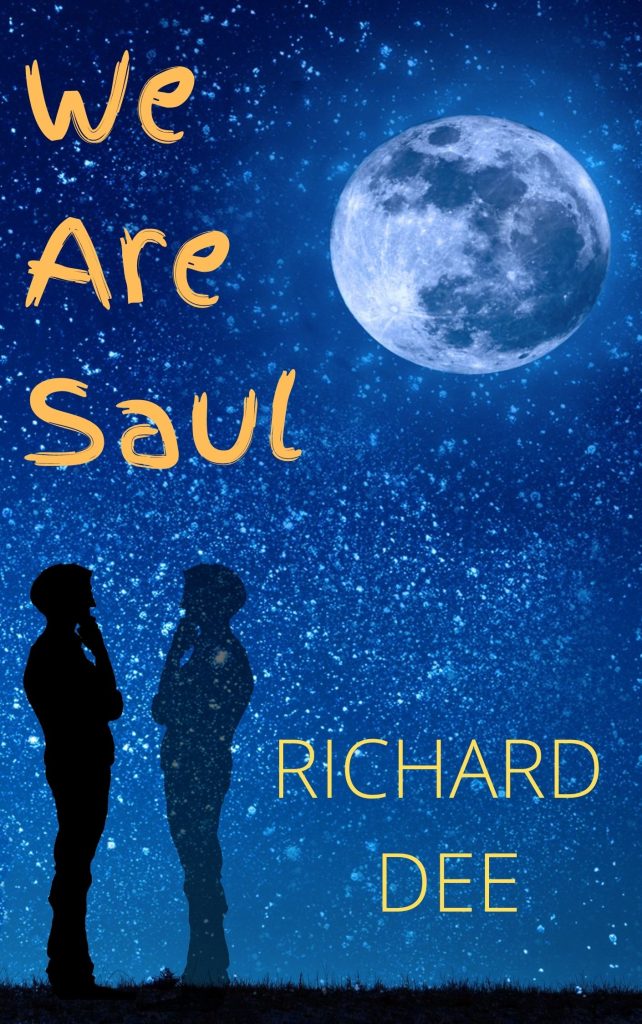
When Saul is paralysed in an accident, he thinks it’s the end of his life. In fact, it’s just the beginning.
While trying to come to terms with his injuries, the mysterious Dr Tendral offers him a way to make a difference. All he has to do is join his project. There are no other details until he agrees, he’s either in or out.
What choice does he have?
Agreeing is just the beginning. Saul undergoes drastic surgery, only then is the full depth of the project revealed.
Or is it?
As time goes on and he learns more about Tendral’s scheme, Saul’s new life becomes increasingly difficult.
In the end, he has to abandon everything as he learns the truth.
All second chances come with a price.
The novel started out as a short story called Me and My Shadow.
Then there are a couple of short stories that have remained as such. Both have a medical theme, but both are slightly different from what you might imagine,
First up is A Choice, Once Made.
A hospice bed is a lonely place. It leaves you with time to think, especially if, like me, you have no friends or family to visit you. All you see are doctors, nurses and counsellors.
Not that I have anything to complain about; I’m relatively pain-free, and all the staff treat me well.
After my breakfast had been cleared away and I had been helped to wash, a routine that left me breathless, I was in bed reading the papers when the door opened.
A lady I didn’t recognise came in and wished me a cheerful “good morning.” The light from the window behind her, as she crossed to the chair, gave her a faint aura.
“Mr Levitt?” she said, “I’m Molly Silven.”
“Hello,” I replied. “Are you new here? I haven’t seen you before.”
“I’ve been assigned to you,” she said, with a smile. “It’s my job to make sure you’re at peace with yourself.”
It sounded a little strange but was probably a service they provided that I hadn’t noticed, or needed. Maybe it was because they knew things were getting close to the end.
“Do you want to tell me about your life, your decisions?” she asked. “Are you content?”
I thought for a moment.That was a good question. How can anyone be content when there was still so much that I wanted to do?
“I suppose,” I began, “that I’ve had a good life. I’ve achieved some things that I’m proud of, been comfortable and provided a service that has benefitted others.”
“Hmmm,” she muttered. “That’s not what I really meant. Has your life worked out how you hoped or expected?”
“I don’t know what I expected,” I said. “I always thought that I’d have a wife, a family. Somehow it never happened. Long ago, I decided to devote all my energies to work.”
“Is that something you regret?” she was probing. Her face was expressionless.
I didn’t know how to answer; it was a subject that I had closed in my mind.
“Once, I thought I might have all that, but I couldn’t get the courage to act in time. It made me determined to never falter, drove me to achieve.”
She reached over and took my hand. “Close your eyes,” she said. “And tell me all about it.”
So I told her about the day, sixty years ago, when I had seen her. How she saw me and the messages that passed, unspoken, in that brief contact. And how I had dithered, and she had gone.
When I had finished and opened my eyes, she wiped my tears away with a tissue.
“If you could go back,” she whispered, “would you do things differently?”
“Yes.” I could hardly speak. The pent-up emotions of reliving the memory had overcome me.
“Take my hand again,” she said. “And close your eyes.”
I did, and suddenly, I wasn’t in the bed anymore. I was in the park. I glanced down. I was wearing jeans and trainers, my feet sank into the grass. My arms were free of the tubes and bandages. There was no pain, only an incredible feeling of lightness.
I looked around, this was the most vivid dream I had ever had. I could feel the warm sun on my face and smell fresh-cut grass.
Then, exactly like before. I saw her.
There was a whispering noise in the breeze. It seemed to say, “Now’s your second chance. Ask her.”

The second is called You Will Do Great Things.
The knock on the door woke me. It was mid-afternoon, on a cold, wet autumn day.
Visitors were rare, my family were all gone. It’s not a nice thought to know you’ve outlived them all, but disease can be merciless.
There were two of them, they flashed official-looking cards at me. “I’m from the Home Office,” the taller one said. “My colleague is a doctor. May we come in? It’s rather important.”
I thought it strange that names had not been mentioned. Mine or theirs. “Why not,” I said. “I’ve got nothing important to do today.”
We sat in my front room. I offered them tea but they both refused.
“What’s it all about?” I asked. “I hardly think I warrant a visit from the Government, at my age.”
“On the contrary,” the shorter, bespectacled one said. He had been introduced as a doctor, even without the bag, you would have known. He looked and spoke like one. “Right now, you might just be the most important man in the world.”
I was intrigued by that. I was retired and while I might have been important once, surely those days were long gone?
“Did you give blood, about a month ago?” The tall man asked.
“I did, and I got the text message to say it had been used. Nottingham, I think.”
“That’s right,” he nodded. “It was transfused to a cancer patient, during tumour removal surgery.”
That was good to hear, at least I was still being useful, even if only in a small way.
“I’m glad I could help,” I said. “But you don’t come to see people after every donation. So I’m guessing that there was a problem.”
“Not so much a problem, as a puzzle.” The doctor shifted forward in his seat. “The patient was terminal, riddled with cancer. The surgery was palliative, to make him more comfortable.” He paused, “it was what happened after the surgery that makes this special.”
Now he definitely had my attention. “Go on.”
“The patient went home, a week after his operation.” He looked at the tall man, who nodded. “Completely tumour-free.”
The impact of his statement didn’t register, it was so improbable. Things like this didn’t happen outside the realms of fiction.
“He was in full remission,” he added. “As if he’d never been ill.”
The tall man took over. “Thank you, doctor,” he said. “The thing is, we’ve had experts poring over the case. We’ve looked at everything, there’s only one possible explanation. There has to have been something in your blood that cured him.”
I couldn’t help it, I burst out laughing. “You mean to tell me that my blood cures cancer? Don’t be ridiculous. I’ve been donating blood for forty years, nobody’s ever told me that before.”
“But can you see the potential?” the tall man said. “If we could find something in your blood and isolate it, we could revolutionise medicine.”
The doctor joined in. “Imagine, if we found that we only needed a single drop of your blood to effect a cure, think how many people could be helped from one donation.”
“You’re not old,” the tall man said. “You can give many more donations.”
“Of course,” said the doctor, “that’s all in the future. There’s a way we can start to confirm it. Can I take a sample, please?”
Perhaps this would shut them up. “Of course you can.”
I rolled up my sleeve, while he got a sterile pack from his bag.
“Can you think of anything unusual that happened to you, before you made that blood donation?” the tall man asked. “Anything out of the ordinary? Like weird injuries or eating new foods? Anything at all, no matter how minor.”
While he had been talking, the doctor had taken his samples, I hadn’t noticed. There was only one thing I could think of, but it was so minor that I hesitated.
“There’s only one thing I can think of,” I said. I knew this was going to sound like the crazy tale of a lonely old man, but so what? It was no crazier than the idea that my blood had cured cancer.
“About a week before I donated, I was sitting in the local park, during my morning walk. I was minding my own business when a woman sat beside me.”
The tall man had taken out a pen and was making notes in a small leather-covered book.
“Can you remember what she looked like?”
How could I forget? Her face was etched on my mind. “She had wild curly hair and the most amazing silver-blue eyes. The sort that looks right into you. There was more, she had a knowing smile, as if she had read my mind and seen all my secrets.”
“What happened?”
“She told me that she could see that there was great sadness in my life.”
The tall man’s eyebrows raised a notch. “Did she? That sounds like a strange sort of introduction.”
“I know,” I said. “It was weird. My first thought was that she was some kind of religious freak. Then I wondered if she would ask me for money. I wasn’t sure if it was the lead-up to some sort of scam.”
“I see. Go on,” he said, as his pen scratched on the notepad. “What did you, or her, do next?”
“I felt uncomfortable. ‘I don’t want anything to do with you, ’ I said. I got up to leave, she grabbed my arm. You can’t see it now, but her nails dug into my skin, drawing blood. ‘You will do great things, ’ she said.”
“What happened then?” At least he didn’t sound too dismissive.
“I pulled away from her and walked off. After a couple of seconds, I looked back, to see if she was following me.”
“And?” The pen was poised.
I took a deep breath. This was the bit where they would do one of two things.
“That’s the strangest thing,” I said. “There was nobody there.”
I hope you enjoyed them.
I’d love to get your comments, please leave them below. While you’re here, why not take a look around? There are some freebies and lots more content, about me, my writing and everything else that I do.


Jackie Joy
Hi Richard, I loved the two short stories. Are they part of a novel?. Then if course there’s We Are Saul. Loved this story. In fact I love all your books. Looking forward to the next Andorra Pett. Keep on writting your amazing stories.
Richard Dee
Thank you for all your support. The short stories may form part of a collection at some time in the future, but I have no plans to expand them. Whatever Happened to Andorra Pett is just under 30,000 words now; I’m hoping to have it finished very soon.